Getting to Know the Sugar Palm and Its Role in Indonesian Communities
The sugar palm is more than a familiar part of Indonesia’s tropical landscape. It offers a range of useful resources, including the sap that becomes the raw ingredient for palm sugar.
Getting to know the sugar palm
The sugar palm (Arenga pinnata) is a palm species found in many parts of Indonesia. It has a sturdy trunk, long pinnate leaves, and several parts that are used by local communities. Growing in tropical environments, it is closely connected with rural life in many regions.
Sap: the beginning of palm sugar
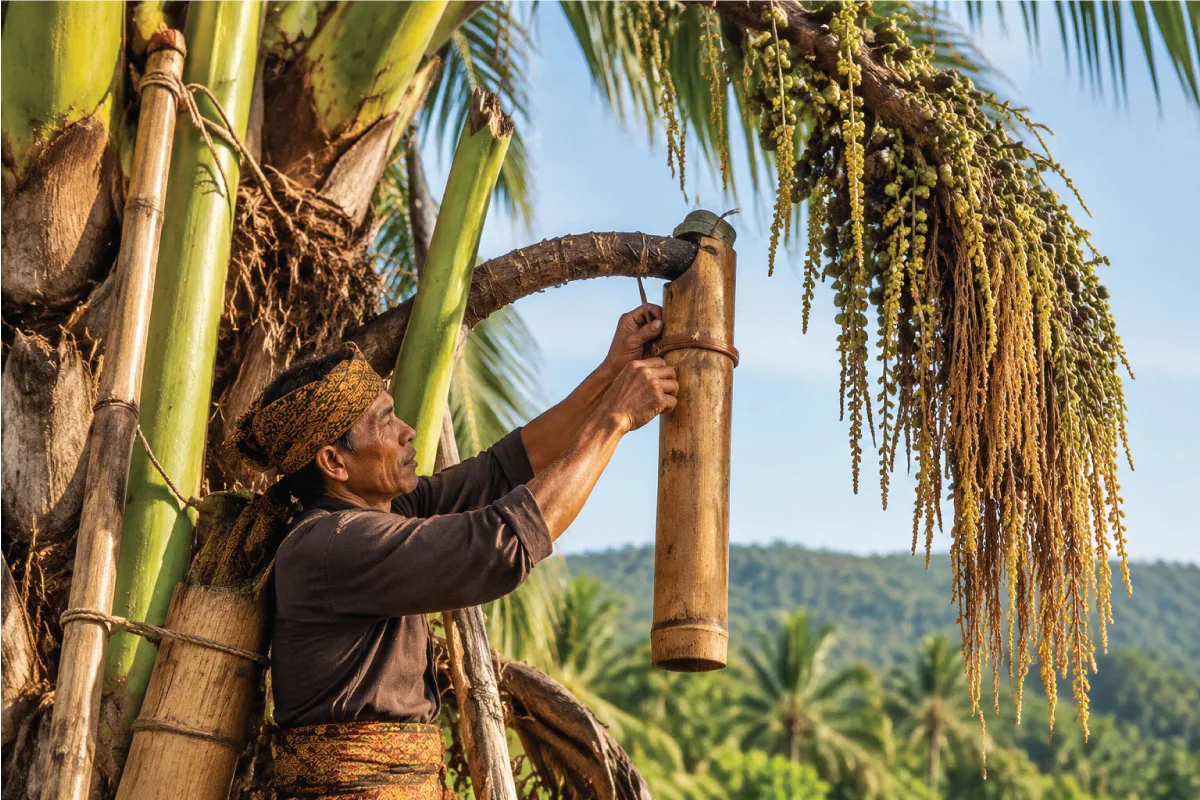
One of the tree’s important products is sap, a liquid collected from its flower clusters through a tapping process. This sap is the raw ingredient used to make palm sugar. After collection, it needs to be handled and processed appropriately before it can be used as a food ingredient.
The role of farmers and local knowledge
Sap tapping calls for skill, care, and experience. Farmers learn how to tend the flower clusters, choose collection times, and gather the sap. This knowledge develops through practice and is passed from one generation to the next in communities across Indonesia.
More than a sweetener
Different parts of the sugar palm are used by communities in different ways. Its sap can be processed into palm sugar, while other parts of the plant also serve local traditions and needs. These uses can support livelihoods, particularly when the trees and their resources are managed responsibly.
Looking after the sugar palm resource
The sugar palm and the knowledge of the farmers who work with it deserve recognition. Management that considers the condition of the trees, the surrounding environment, and workers’ safety can help support responsible use over time. Appreciating palm sugar also means understanding where it comes from and recognising the people involved in its journey.
At Raya Gula, the story of palm sugar begins with nature and the work of farmers. By learning about the sugar palm, we can better understand the journey of this natural ingredient before it reaches everyday food and drinks.